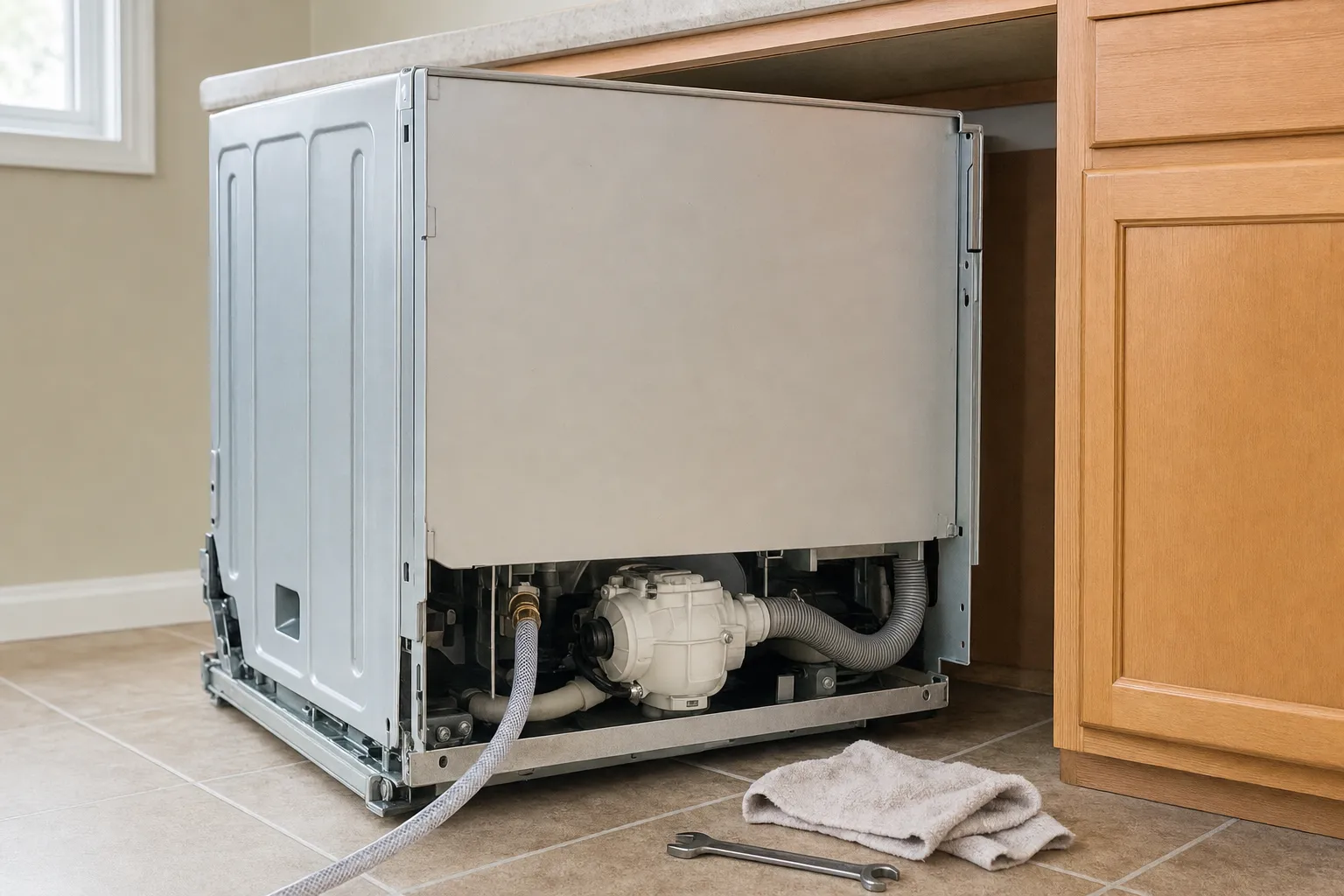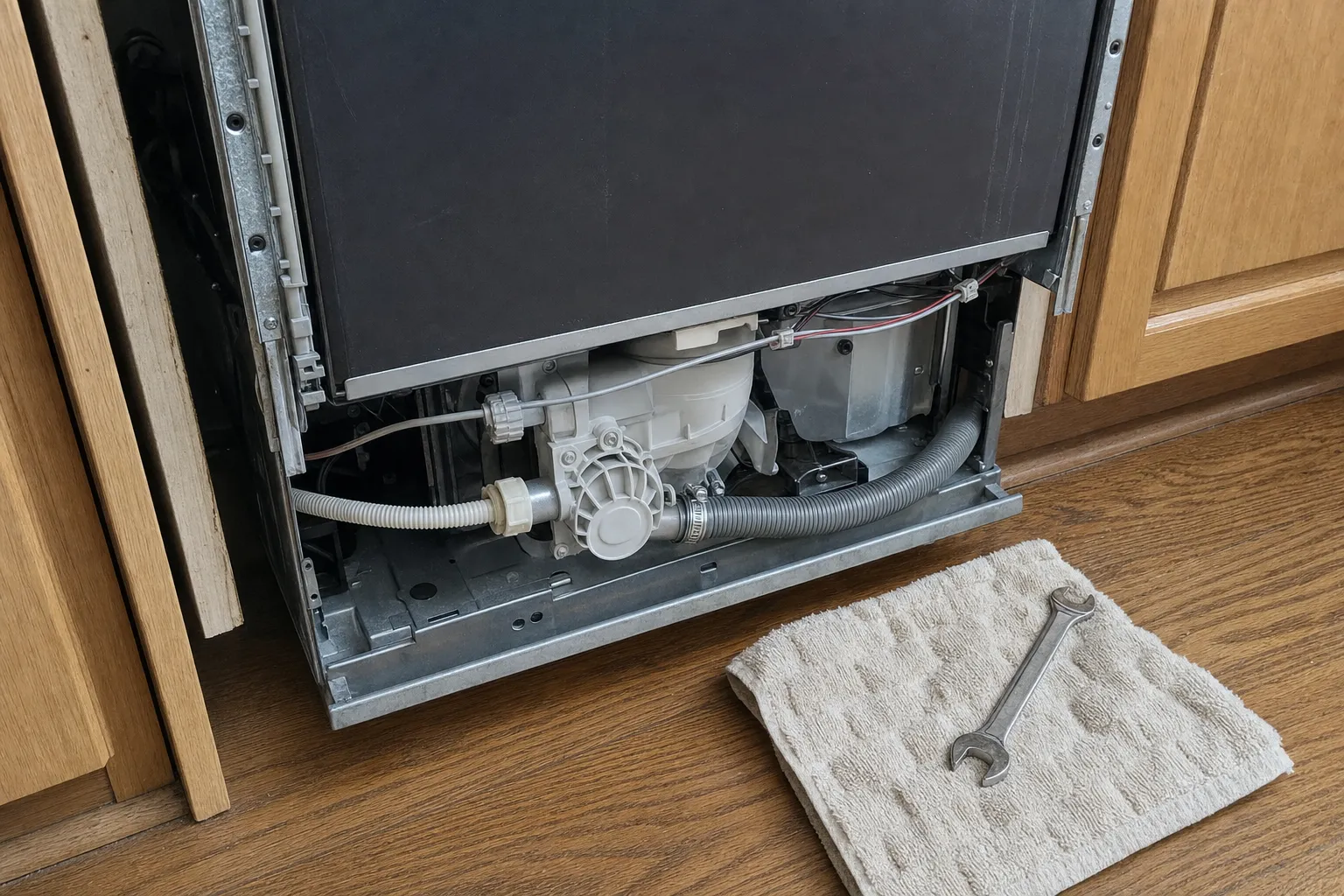
If your dishwasher smells moldy, food scraps and stale water are sitting somewhere the wash never reaches, and the most likely spot is the filter at the bottom of the tub. Pull the filter and scrub it, wipe the rubber door seal and the strip under the door, then run the hottest cycle with the racks empty. If the musty odor creeps back within a week, water is probably lingering after the drain, which points to the drain path rather than to housekeeping. The advice below fits any make, and the Viking steps match the VDWU and FDWU dishwashers.
Where the musty smell comes from
Mold and bacteria want moisture, something to eat and darkness. A closed dishwasher offers all three between loads. The smell nearly always starts in one of five places:
- The filter assembly. Grease, seeds, paper labels and bits of rice end up here on purpose. After a few weeks without cleaning, they form a slimy mat.
- The sump under the filter. A little water stays in the sump after every cycle. That is by design, but behind a clogged filter it goes stale fast.
- The door gasket and the bottom door edge. Spray never hits the underside of the door, so drips and crumbs dry there into a crust.
- The spray arms. Plugged jets leave parts of the tub unrinsed, and the holes can hold debris of their own.
- The drain hose. When water from the sink drain can run back into the hose, the dishwasher starts to smell like the pipe under the sink.
Clean the filter first
Viking tells owners of its VDWU and FDWU dishwashers to clean the filters at least once a week, which surprises people who have never taken them out. It is a quick job:
- Roll the lower rack out of the way.
- Give the combined micro and coarse filter a quarter turn to the left, then raise it free of the tub floor.
- Slide out the flat filter that sits beneath it.
- Brush all three pieces under running water. A soft toothbrush and a drop of dish soap are enough.
- Lay the flat filter back in, set the assembly on top and turn it until it clicks.
While the filter is out, shine a flashlight into the sump and pick out anything solid, such as glass chips, fruit pits or twist ties. Never run a cycle with the filter removed, because loose debris then travels straight to the pump.
Seals, the door edge and the spray arms
Wipe the gasket all the way around with warm, soapy water, opening each fold with a fingertip. Black specks tucked inside the folds are mildew, and a soft cloth with mild soap usually lifts them. Next, lower the door flat and clean its bottom edge and the two corners where the gasket ends, since those corners hold moisture longest.
Spin each spray arm by hand. If one drags or the jets look blocked, most arms unclip or unscrew so you can rinse them at the sink. A toothpick clears the holes; flush water through from the inside so debris leaves the arm instead of moving deeper into it.
Why the tub stays damp in a Kirkland kitchen
From fall well into spring, Kirkland homes tend to stay shut against the rain, and a sealed tub in a cool, damp house can hold moisture for a day or more after a cycle ends. That is plenty of time for mildew to take hold. A few habits make a real difference:
- Leave the door open an inch or two once the cycle finishes so the tub can breathe. Keep it closed if toddlers or pets are around.
- Run the machine every few days rather than letting a half load sit dirty for a week.
- Check the rinse aid. It helps water sheet off so the tub and dishes dry sooner. On the VDWU and FDWU models it adjusts from P:0 to P:4 and leaves the factory at 3; raise it if glasses come out spotted, and lower it if a blue film wipes off by hand.
- Use the sanitize cycle now and then. NSF/ANSI 184, the standard for home dishwashers, asks for a 150°F final rinse and a 99.999 percent drop in bacteria, and it only verifies that result on the sanitizing cycle, so an everyday wash is not proof of it.
When the drain is the real source
If the filter is spotless and the smell still returns within days, look for water that should have left. Open the door just after a cycle finishes. A shallow film in the sump is normal, but water standing over the filter is not. Our guide to standing water in a Viking dishwasher works through that problem in order, from a kinked hose to a weak drain pump.
Then look at how the drain hose runs under the sink. There are two common ways to keep sink water out of the dishwasher:
- High loop. The hose is fastened up near the underside of the counter before it drops to the drain connection, so gravity stops dirty water from running back.
- Air gap. A small chrome cap on the sink deck or counter breaks the line, so sink water cannot siphon back at all. When it clogs, water spurts out of the cap during the drain.
Either one works when it is set up correctly. Trouble starts when a hose slips down and sags below the drain connection, letting sink water pool inside it. Fastening the loop back up is often the entire fix, and an air gap cap can be pulled off and rinsed.
Watch the display as well. On VDWU and FDWU units, E:01 flashes when the machine senses overfilling or a leak and tries to pump out, while E:02 means the water supply was cut off. An E:01 that keeps returning needs a technician, because water may be collecting in the base.
When to call, and what it costs
Call (425) 629-0033 if the smell outlasts a clean filter and a properly routed hose, if water stands over the filter after cycles, or if E:01 keeps coming back. We cover Moss Bay, Juanita, Totem Lake and Bridle Trails. Our visit costs $89 flat, which covers driving out and finding the fault; say yes to the repair and those $89 are subtracted from its price. What a failing drain pump or control costs to replace is set out on the pump and control cost page, with the firm figure given once the fault is found, and our dishwasher repair page explains what a visit covers.
If the machine is still fairly new, read Viking’s warranty before paying anyone. For the first two years it is fully covered, and if you bought a newly built house, that clock can start at closing instead of at purchase, whichever gives you more time.
Asked after reading this
Is it safe to keep using a dishwasher that smells moldy?
For a few days, usually yes, provided the dishes come out clean and do not pick up the odor. The smell tells you buildup is growing somewhere inside. Clean the filter and the door seal soon, and stop using the machine if plates smell stale or feel gritty after a cycle.
Can I pour bleach into the dishwasher to kill the smell?
It is better to skip chlorine bleach, especially in a stainless steel tub, since it can pit metal and harden rubber seals over time. Scrubbing does more good: clean the filter, wipe the gasket and run the sanitize cycle. Never combine bleach with vinegar or any other cleaner.
Why does the smell come back a few days after I cleaned the filter?
A returning odor nearly always means water is staying in the machine or seeping back into it. Look for water sitting above the filter once a cycle ends, then check the drain hose under the sink; a hose that sags without a high loop lets sink water drift back in between loads.
What is the difference between a high loop and an air gap?
Both keep dirty sink water from flowing back into the dishwasher. A high loop is the drain hose fastened near the top of the sink cabinet; an air gap is a small counter fitting that opens the line to air. The air gap protects more but needs an occasional cleaning.
Does Viking's warranty cover a smelly dishwasher?
It covers defects, not cleaning, so a failed pump inside the coverage window would qualify while a clogged filter would not. Viking's full coverage runs two years from purchase or from closing on new construction, whichever is longer, so check your dates before booking paid service.